The main Etsy cons are stacked selling costs, crowded search results, limited branding control, dependence on platform policies, and difficulty getting help from seller support. You get access to buyers, but you have less control over how they find your shop and what happens when something goes wrong.
Start by checking whether your listings leave enough profit to justify the work and risk. Check those trade-offs in a clear order, then work through a concrete POD mug decision to help you decide whether to keep investing, narrow your catalog, or diversify.
Etsy cons: how it works when you sell on someone else's marketplace
Etsy puts your listings in front of people already shopping, with close substitutes just a click away. In exchange for that buyer access, you give up some storefront control and brand recognition and accept selling costs, uncertain traffic, platform rules, and a support process that some sellers struggle to use.
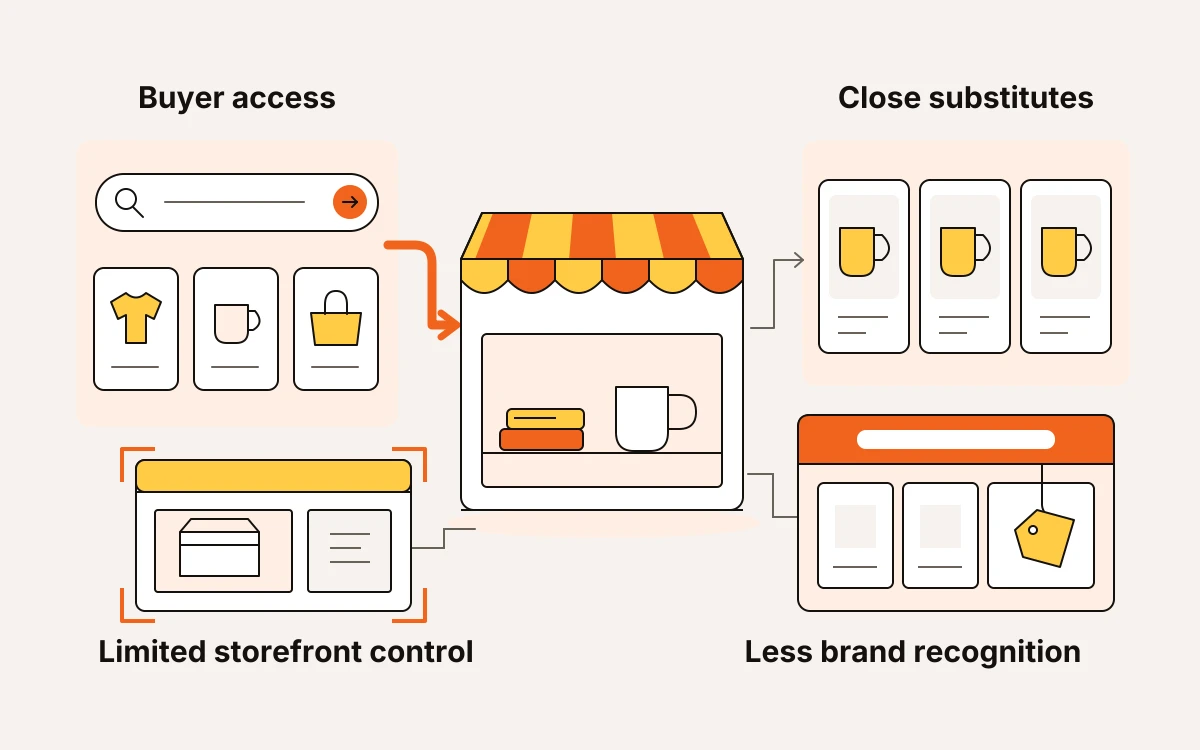
Competition and marketplace dependence need separate attention. A buyer can compare your mug with similar mugs and choose by price or shipping convenience without remembering your shop. You also don’t control the channel bringing that buyer to your listing. A stronger offer helps you compete, but you still depend on the marketplace to bring people through the door.
Your branding has limits, too. Photos and shop sections help you organize a recognizable shop. Limited storefront customization and prominent Etsy branding make it harder for buyers to remember your business instead of Etsy.
If your visits fall, check which traffic source changed before blaming competition or search ranking. Some sellers report unexplained month-to-month declines, even though Etsy discloses some ranking factors. Those accounts tell you what happened to their traffic, but they don’t explain what caused a particular shop’s drop.
Getting support can be frustrating, too. Sellers commonly report difficulty getting help and turn to the community forum, though that doesn’t mean every support request stalls. Keep your listing details, notices, and correspondence together so you can explain a problem clearly when you need help. Community replies can help you interpret an issue; Etsy still makes the decisions about your account.
Where to start: check eligibility, profit, then demand
Check anything that could stop your shop from operating first, then anything that makes each order unprofitable. Work on traffic once those checks are done.
- Etsy can suspend or close shops that don’t follow its selling policies, so resolve policy exposure first. Consult Etsy’s current Creativity Standards, where Etsy publishes its rules on what qualifies to sell, and check the requirements for your products and production partners. If you haven’t settled whether a listing is eligible, address that before promoting it.
- If margins disappear, check costs before buying Etsy Ads. Review what an order leaves after listing costs, transaction fees, Etsy Payments processing, applicable Offsite Ads fees, and fulfillment. For POD, include production and shipping; for digital downloads, account for creation and customer-support time. If an order doesn’t pay for the work, change the price, production choice, or product before paying to attract more orders.
- If visits stall, investigate demand before rewriting every listing. Check whether buyers are still searching for the product and whether interest is seasonal. Then compare which listings lost visits and which held steady. If the decline is concentrated in one product type, investigate that market first. You don’t need to treat your whole catalog as broken.
- If workload overwhelms profit, simplify before expanding. Say you sell a personalized POD mug that requires repeated proof revisions. Before adding more designs, narrow the personalization choices, clarify what buyers must submit, and set a processing time that covers approval work. Keep the version that earns its place without an endless message thread.
For today’s check, choose the first unresolved issue in that order and write down one change you can make. Leave the rest of the shop alone until you’ve addressed it.
A worked example: should your POD mug stay on Etsy?
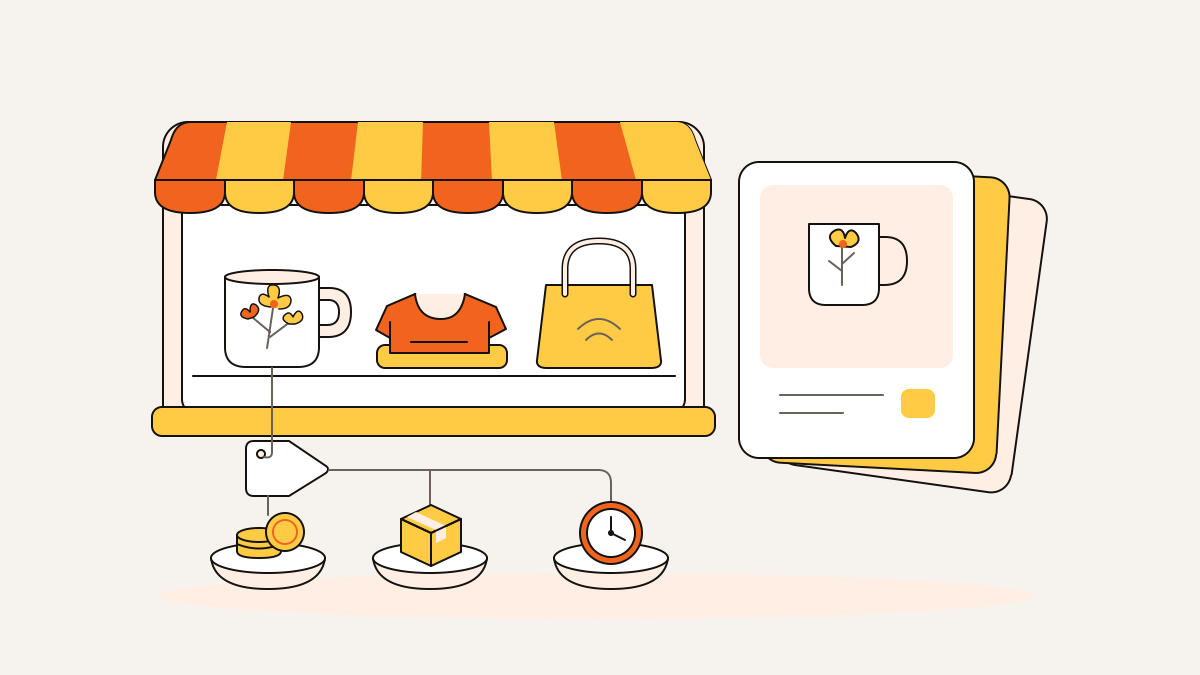
Say you sell personalized wildflower gardening mugs. Keep the listing only if its price covers fulfillment, Etsy charges, and the time you spend turning a buyer’s name and flower choice into a print-ready order.
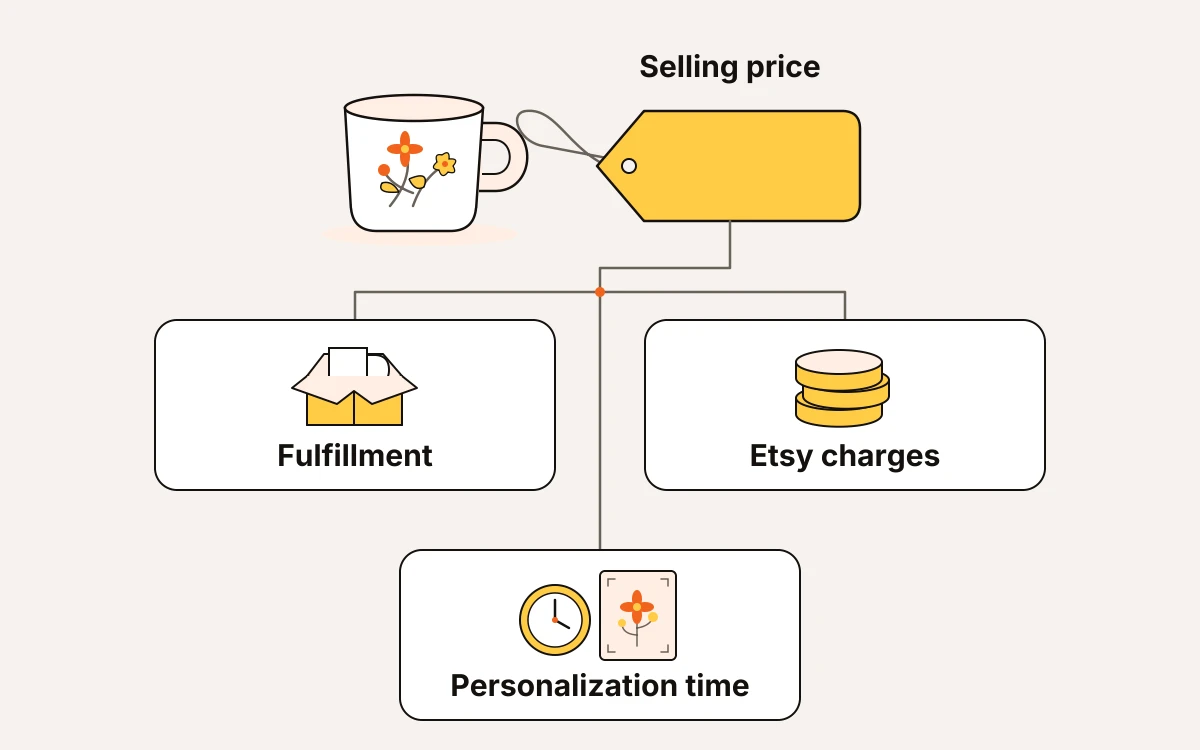
Open eMarketInsight’s free POD profit calculator and enter your actual selling price, print cost, supplier shipping charge, buyer-paid shipping, listing and transaction fees, Etsy Payments processing charges, and applicable Offsite Ads fees. Use your shop’s charges rather than another seller’s fee breakdown.
Next, check what the remaining money has to cover. Read the listing’s recent message threads and note the work each order takes: correcting names, preparing proofs, chasing approvals, and handling replacements. A positive calculator result isn’t enough if every order buys you an evening of unpaid revisions.
Choose the fix that matches the problem:
- Reprice if the standard order is straightforward but leaves too little after costs. Start with the price your costs require instead of matching the cheapest mug. Use the POD pricing guide for the full method.
- Simplify personalization if the standard order works financially but custom requests eat up the margin. Keep the name-and-flower version; remove open-ended design requests. Set processing time to include approval work, and confirm your supplier has the mug available.
- Retire if neither a workable price nor a simpler offer leaves enough for your time. Don’t buy Etsy Ads to keep an uneconomic listing busy.
For this mug, if the cost check passes but message threads show repeated layout revisions, simplify personalization. Remove custom layout requests from the listing first. Another wildflower design can wait.
What to decide this week: keep, narrow, or diversify
Finish this week with a decision for each product and a review date. Keep Etsy where the economics work, narrow the offers that drain your time, and consider another storefront only if it addresses a clear business need. Hold off on another subscription until you’ve made those decisions.
- Assign keep, change, or pause. Keep products that cover their costs and pay for your work. Change products with a specific problem you can fix. Pause those that can’t support a workable price or reliably meet your processing time. For the mug above, carry the personalization change into the listing before expanding the range.
- Schedule a listing experiment with a clear endpoint. Use the existing listing-audit guide to choose a single change. If shoppers view a listing but don’t buy, test a clearer first photo before rewriting everything. Record what you changed, what result you’ll watch, and when you’ll review it.
- Map the work diversification adds. If brand control matters most, list the tasks an independent storefront adds: setup, checkout, customer service, and customer acquisition. Decide where those buyers will come from before paying for the storefront.
- Put the review date on your calendar. Check profit, buyer response, and support workload before committing more inventory or subscriptions.
Frequently asked questions
Why are so many people leaving Etsy?
Some sellers leave because fees, price pressure, unpredictable traffic, or policy disputes make Etsy less worthwhile for their shop. Seller complaints alone don’t show a current mass departure. The April 2022 seller strike concerned fee increases and other policies; it doesn’t tell you what’s happening now. Look at your own margins and workload before deciding to leave. If a product range is unprofitable, narrow it first. And factor in the work of finding customers: an independent storefront needs its own customer acquisition.