The best Etsy shop ideas to test this week are focused digital downloads, niche apparel, and personalized gifts that fit what you already make. Pick one buyer and one use case before adding products. If you already have a shop, start with its closest useful extension.
Build a buyer-specific shortlist, then use clear rules to reject ideas that don’t fit your costs or workload. Work through an example using an existing design to plan one manageable listing test. Keep the goal practical: choose what to test in your shop this week, before you add to that folder of designs you never publish.
Choose your shop direction before choosing another product
Choose a model you can deliver reliably on a busy week. An easy launch only gets you started; your available time also needs to cover maintenance and customer requests alongside designing.
- Digital downloads: Choose these if you’re comfortable preparing files and keeping them updated. You can sell the same file repeatedly without shipping or fulfillment costs, but updates and piracy remain part of the workload.
- Print on demand: Choose this if you want physical products without holding inventory. Fulfillment is outsourced, which leaves you with limited quality control and thinner margins.
- Personalization: Choose this if you can reliably handle buyer details, edits, and approvals.
If you’re starting fresh, rule out any format you can’t support alongside your regular commitments. If you already sell, let your current buyers’ needs guide the choice. A new product fitting neatly into your shop sections isn’t enough reason to add it.
Before choosing, check whether you can deliver the product, maintain it, and repeat the work. If your weekly hours are limited, favor reusable designs and templates over one-of-a-kind work.
8 Etsy shop ideas organized by buyer and use case
Shortlist the ideas you can make well with skills you already have. Each gives you a specific buyer and use case to test; none is a proven winner.
Printable planning sheets for a specific hobby
Your buyer is a home gardener keeping track of planting and harvests. Start with a printable garden journal with seed-starting and harvest logs. Choose this if you understand the hobby well enough to build useful fields. A decorated blank page won’t do that job.
Coordinated printable art for a defined room style
For a reader decorating a warm, neutral reading nook, offer coordinated book-themed digital downloads with consistent colors and typography. This fits if your existing artwork already shares a recognizable style and you can prepare clear print-size instructions.
Editable invitations for a specific wedding aesthetic
Start with an editable invitation for a couple planning a rustic botanical wedding, using original floral details and matching information-card styling. Choose this if layout is your strength and you can explain the editing process clearly. Start with an aesthetic you can execute consistently.
Original illustration packs for a specific creative project
A scrapbooker documenting a garden season needs a coordinated pack of original vegetable, flower, and garden-tool illustrations. Choose this if you already draw and can supply clean files with clear usage terms.
Typography shirts for a specific hobby community
Your buyer is a birdwatcher buying something to wear on weekend outings. Start with a print on demand shirt featuring an original birdwatching phrase and readable typography. Choose this if you know the community’s language and can make the design work on fabric as well as on your screen.
Personalized mugs for a specific gift recipient
For someone buying a thoughtful gift for a gardening grandparent, offer a mug pairing an original garden illustration with name personalization. Choose this if you already handle personalized orders comfortably and can make the buyer’s instructions unambiguous. Favor that experience over adding another unfamiliar workflow.
Original crochet or knitting patterns for a defined project
Start with an original plant-pot cover pattern with progress photos for a crocheter looking for a small home-decor project. Choose this if you can develop, test, and explain the pattern yourself. Attractive finished-project photos don’t replace usable instructions.
Physical prints extending your existing printable art
Your buyer likes your artwork but wants a ready-printed version. Start with a physical print of an existing design. Choose this if you already sell printable art and can check print quality before publishing.
Check buyer demand and a visible gap before designing
Check for buyer interest and a specific need your listing can serve better before spending an evening designing. Both give an appealing idea enough grounding for a viable test.
- Compare buyer phrases. Use eMarketInsight’s free Etsy keyword research tool to compare phrases such as “reading corner wall art” and “book club gift print” for demand, competition, prices, and top sellers. Its demand signals draw on listing views, favorites, and purchases; search activity is estimated, not an official Etsy search count. Look for interest tied to how buyers will use the item, rather than interest in a broad product category.
- Inspect the first page on Etsy. Note what the listings offer, who they’re for, and what buyers still have to compromise on. You might find room for physical prints among downloads, readable personalization, or artwork sized for a small reading nook. A different font alone isn’t much of a gap.
- Narrow crowded ideas. If established shops dominate, focus on a more specific buyer or occasion rather than copying their products. Then search that narrower phrase again. Keep it only if the results still match what you plan to sell.
- Check interest over time. Use Etsy Search Trends to compare daily activity and sales across its available windows. If interest appears only around an event, plan for that timing. If it persists, prioritize the idea for an ongoing collection.
Reject ideas that fail your cost or workload check
Keep an idea only if its selling price covers fulfillment and leaves enough to pay for your time. A listing that keeps you busy without paying you isn’t a useful extension of your shop.
Before you choose, run this check:
- Count the full cost: production or materials, shipping, Etsy fees, and your time spent on personalization, buyer messages, and file preparation. For physical products, use eMarketInsight’s free POD profit calculator to compare your proposed price with fulfillment costs.
- Check the workload. If personalization eats up your evenings, simplify the offer with a fixed layout, fewer choices, and one clear way for buyers to submit details.
- Check processing time. Choose a turnaround you can meet alongside your existing orders and day job, including weeks when you’re busy.
Use the Etsy fees and POD pricing guides for the detailed breakdown. If the idea only works when your labor is free, raise the price, reduce the work, or reject it.
Worked example: turn a printable-art shop into a focused test
Say you sell botanical printable art for reading corners. Test a matching physical print before adding unrelated merchandise: it gives the same buyer a ready-to-display option and keeps your shop focused on that audience.
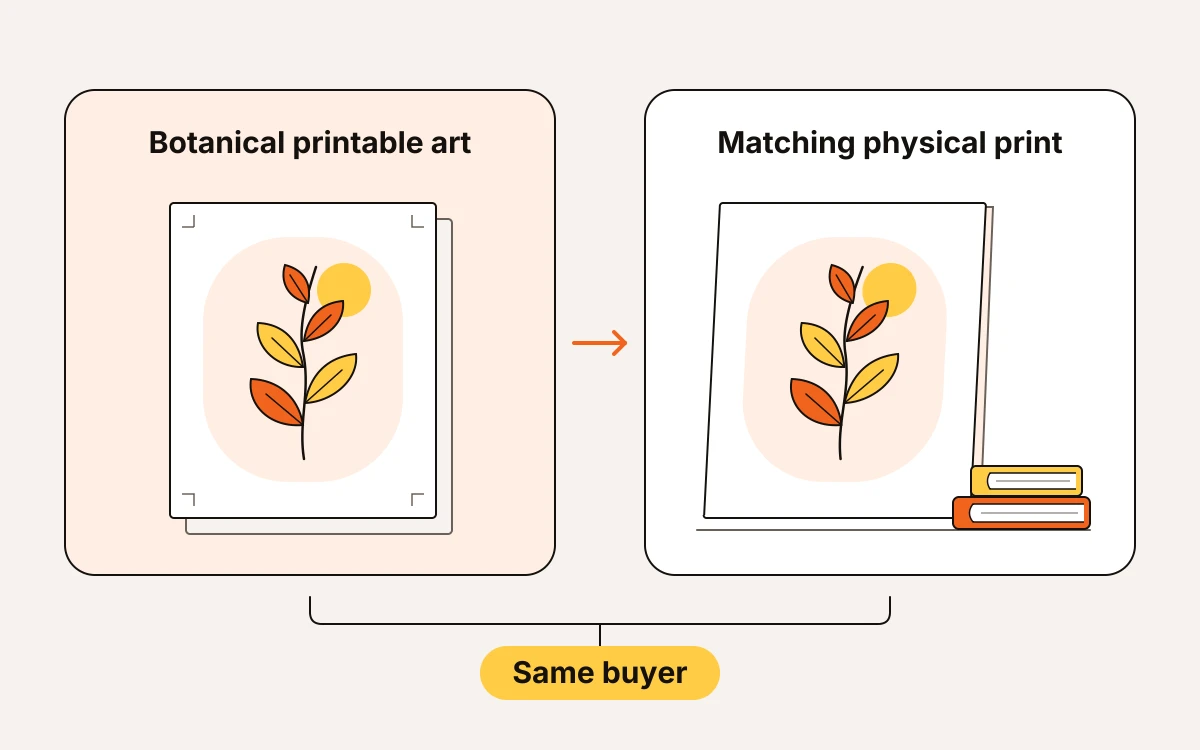
You can reuse the collection’s visual direction while checking whether buyers want the artwork without arranging their own printing. That gives you a useful shop-management test.
- Choose the design. Use an existing fern illustration that fits your collection. Having it in your shop gives you a starting point; you still need to check demand.
- Draft the listing title. “Botanical Reading Nook Art Print, Unframed Fern Illustration.”
- Make the format unmistakable. Show the physical print clearly, state that it arrives unframed, and distinguish it from your digital downloads.
- Keep the collection together. Place the listing in a Reading Corner Art shop section alongside the matching printable.
Then compare interest in the formats using views, favorites, and purchases. If the physical listing gets views but little further interest, check its photo, delivered price, and format clarity before designing more prints. If it barely gets seen, address discovery before rejecting the product direction.
Publish the focused test this week, then use buyer response to guide the next addition. Give the test more than a week before making a final decision.
Your checklist for publishing one focused test this week
Before publishing, complete these checks:
- Write the offer in one sentence: who it’s for, what the product is, and what makes it different.
- Prepare a representative image. Show the actual design, readable text, and what’s included. For a mug or apparel test, use eMarketInsight’s free mockup generator with your artwork. Don’t let styling imply that props come with the purchase.
- Check the listing details. Make the format, dimensions, variations, personalization instructions, and delivery expectations clear.
- Place the listing in the appropriate shop section.
Record any changes after publishing so you have that context at the next review.